WATERMIST FIRE SUPPRESSION
What is Water Mist?
Water mist is a highly efficient fire suppression technology that uses high‑pressure water to produce an ultra‑fine mist. Specially engineered nozzles atomise the water into microscopic droplets, enabling the system to suppress or extinguish fires at an early stage. This fine mist cools the fire, displaces oxygen, and reduces radiant heat — tackling the fire’s core elements simultaneously.
To extinguish a fire, one or more of the three components must be removed: heat, oxygen, or fuel. Water mist systems rapidly cool the fire and reduce oxygen concentration around the ignition point. High‑pressure systems disperse mist at greater speed, removing heat energy faster and reducing overall damage.
Water mist systems are available in high‑pressure and low‑pressure configurations:
High‑pressure systems operate up to 200 bar
Low‑pressure systems operate up to 16 bar
Both wet pipe and deluge configurations can be designed using either pressure type.
Benefits of Water Mist Systems
Choosing a water mist system offers several key advantages:
- Reduced water usage – Requires significantly less stored water than traditional sprinkler systems.
- Minimal water damage – Fine mist limits water discharge, protecting assets and reducing clean‑up.
- Compact equipment – Smaller pumps, tanks, and pipework allow for cleaner, more efficient plant rooms.
- Enhanced safety – No gas is used, eliminating the risk of asphyxiation for personnel.
- Effective cooling – Rapid heat absorption slows fire growth and supports safe evacuation.
Types of Water Mist Systems
Deluge System
A deluge system operates alongside a separate fire detection system. When a fire is detected, the valve opens and water flows through the pipework, discharging from all open nozzles simultaneously. This configuration is ideal for high‑risk areas requiring rapid, full‑coverage suppression.
Automatic System
Automatic systems operate independently. Each nozzle contains a heat‑sensitive glass bulb. When exposed to fire, the bulb bursts, releasing water from the pressurised system. The activation of a nozzle triggers the pump set, ensuring continuous water supply and system pressure.
Dry Pipe System
Dry pipe systems are used in environments where water‑filled pipework may freeze or be vulnerable to damage. The pipework is filled with air instead of water. When a nozzle opens due to heat, the air pressure drops, activating the pump set and allowing water to flow to the fire. A compressor maintains the required air pressure.
Pre‑Action System
Pre‑action systems combine water mist technology with an independent fire detection system. When a fire is detected, the section valve opens, allowing water into the pipework. Only the nozzle exposed to heat will activate, ensuring water is discharged only at the fire location, not throughout the entire zone.
HIGH‑PRESSURE WATER MIST SYSTEMS
High‑pressure systems are available in two formats:
•Cylinder‑based systems
•Pump‑based systems with a storage tank
The choice depends on the required coverage area and discharge duration.
High‑pressure water mist is suitable for both Class A and Class B fires, although the suppression method varies depending on the specific hazard.
All pipework and fittings are manufactured from 316L stainless steel, providing excellent corrosion resistance and long‑term durability.
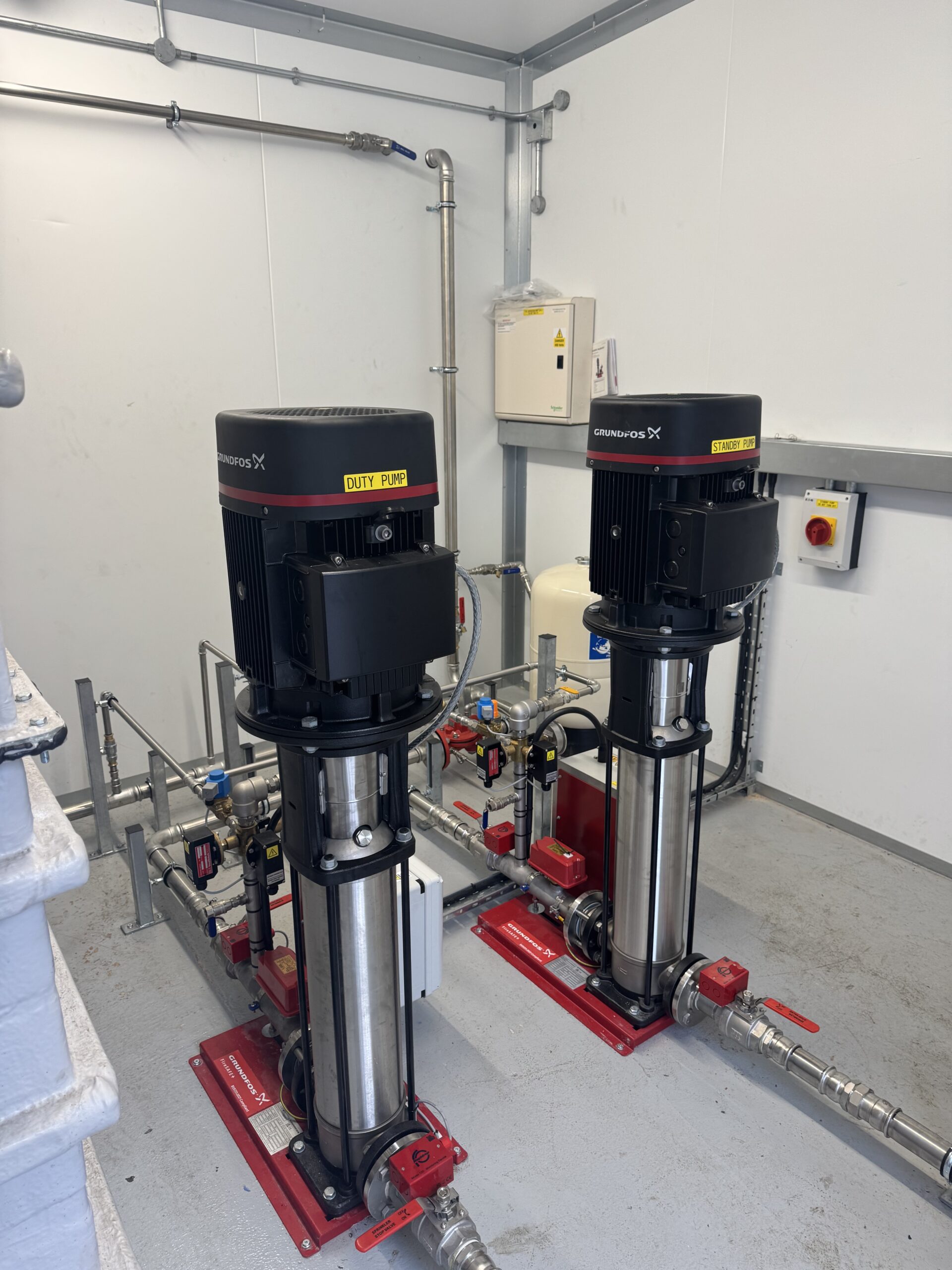
LOW‑PRESSURE WATER MIST SYSTEMS
Low‑pressure systems require a pump set and water storage tank. They discharge water at a much lower rate than high‑pressure systems but still use significantly less water than conventional sprinklers.
Key features include:
•Reduced water and fire damage
•Smaller pipe diameters than sprinkler systems
•Easier installation
•Corrosion‑resistant pipework (galvanised or stainless steel)
•Effective on both Class A and Class B fires
Low‑pressure systems are often selected where water storage capacity is limited or where traditional sprinklers are impractical.
WATER MIST CYLINDER SYSTEMS
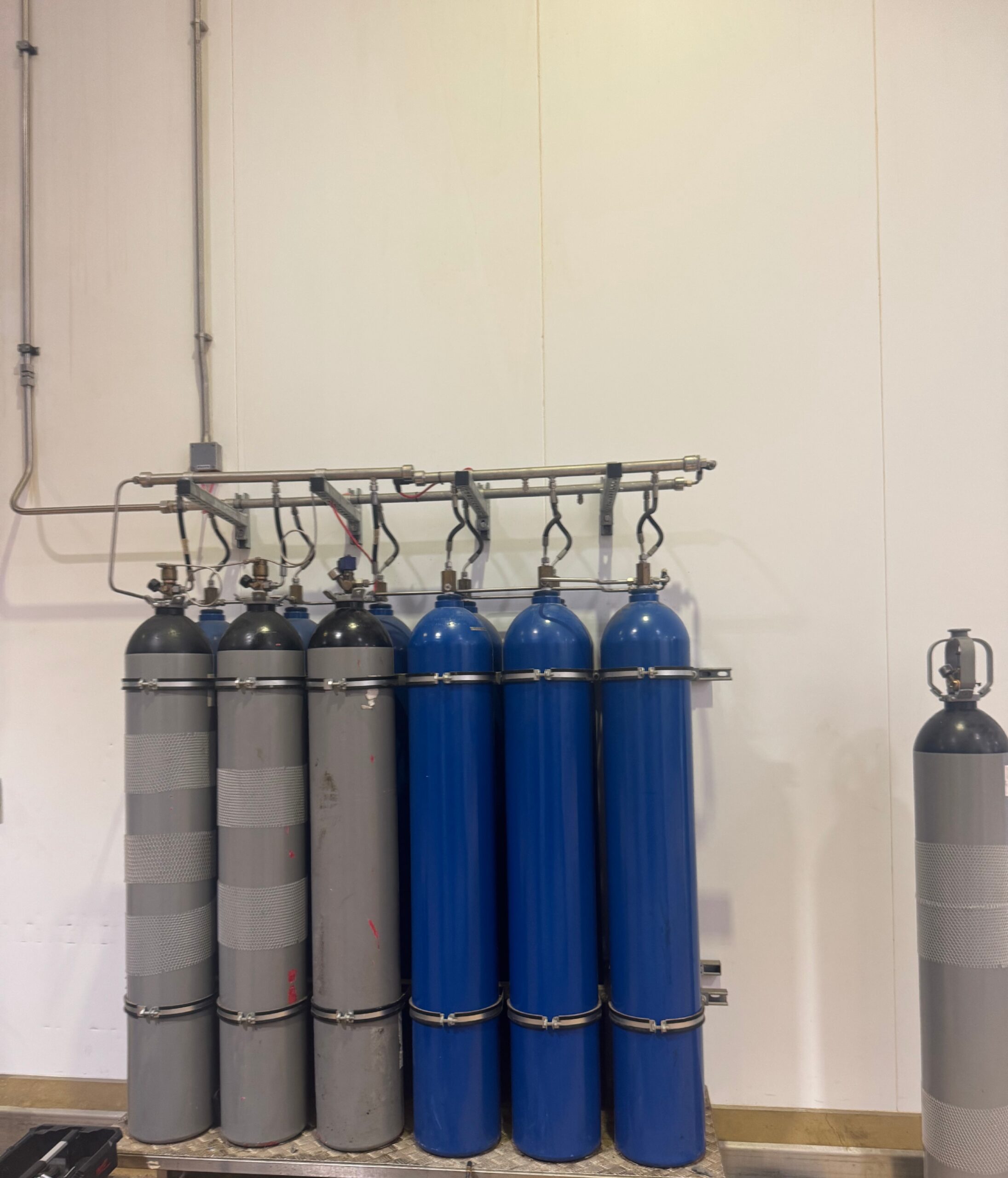
Cylinder systems are compact and require less space than pump‑based systems. They use nitrogen and water cylinders connected via a manifold.
When activated manually or electronically:
1.Nitrogen enters the water cylinder
2.Pressure rises to create high‑pressure water
3.Water mist is discharged through the activated nozzle
Cylinder systems typically operate at 200 bar static pressure, which drops upon activation.
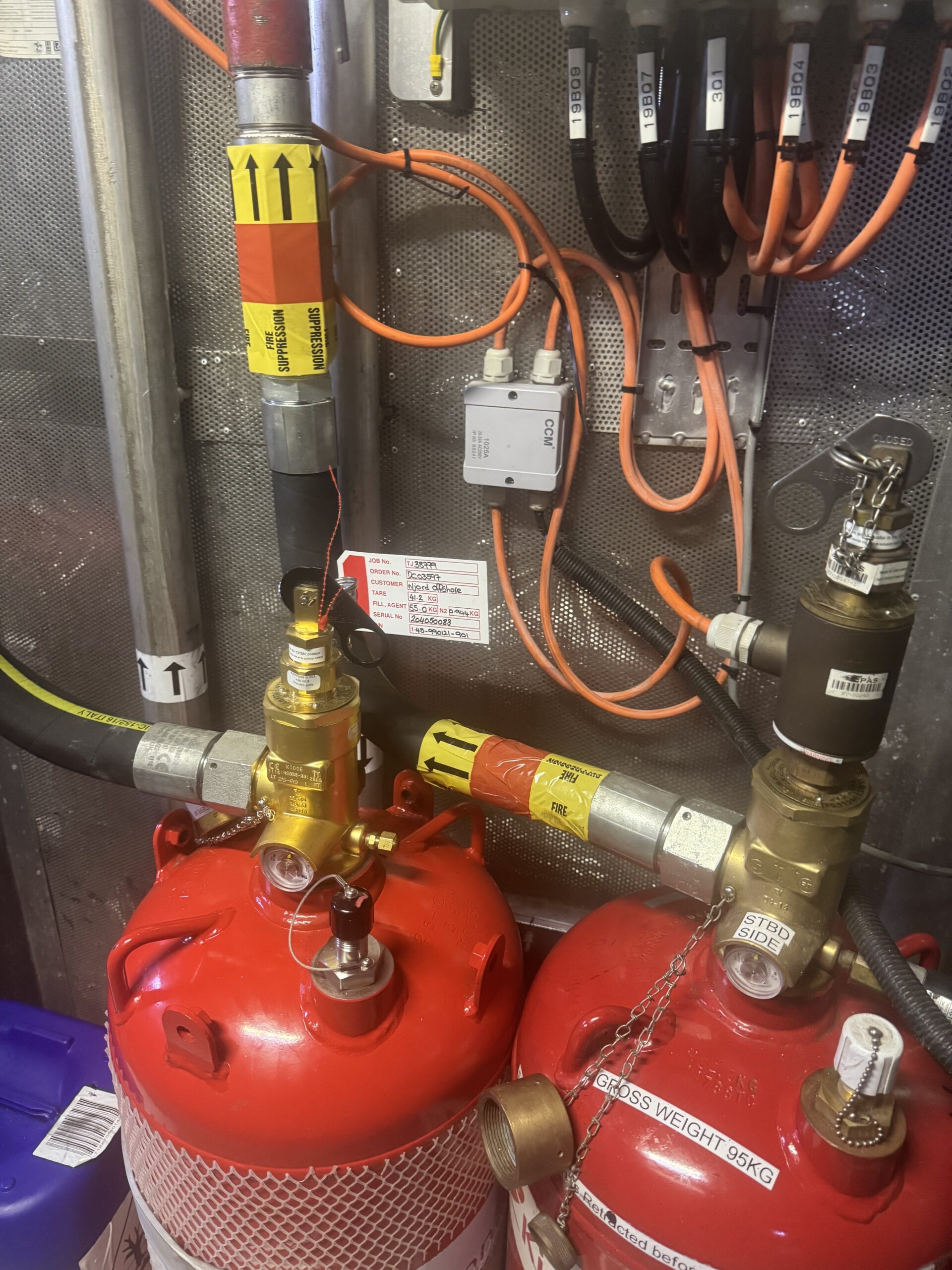
All pressure vessels must be tested or replaced every 10 years. Safe Mist Group provides full hydrostatic testing services to ensure compliance and safety.
BESPOKE FIRE SUPPRESSION SOLUTIONS
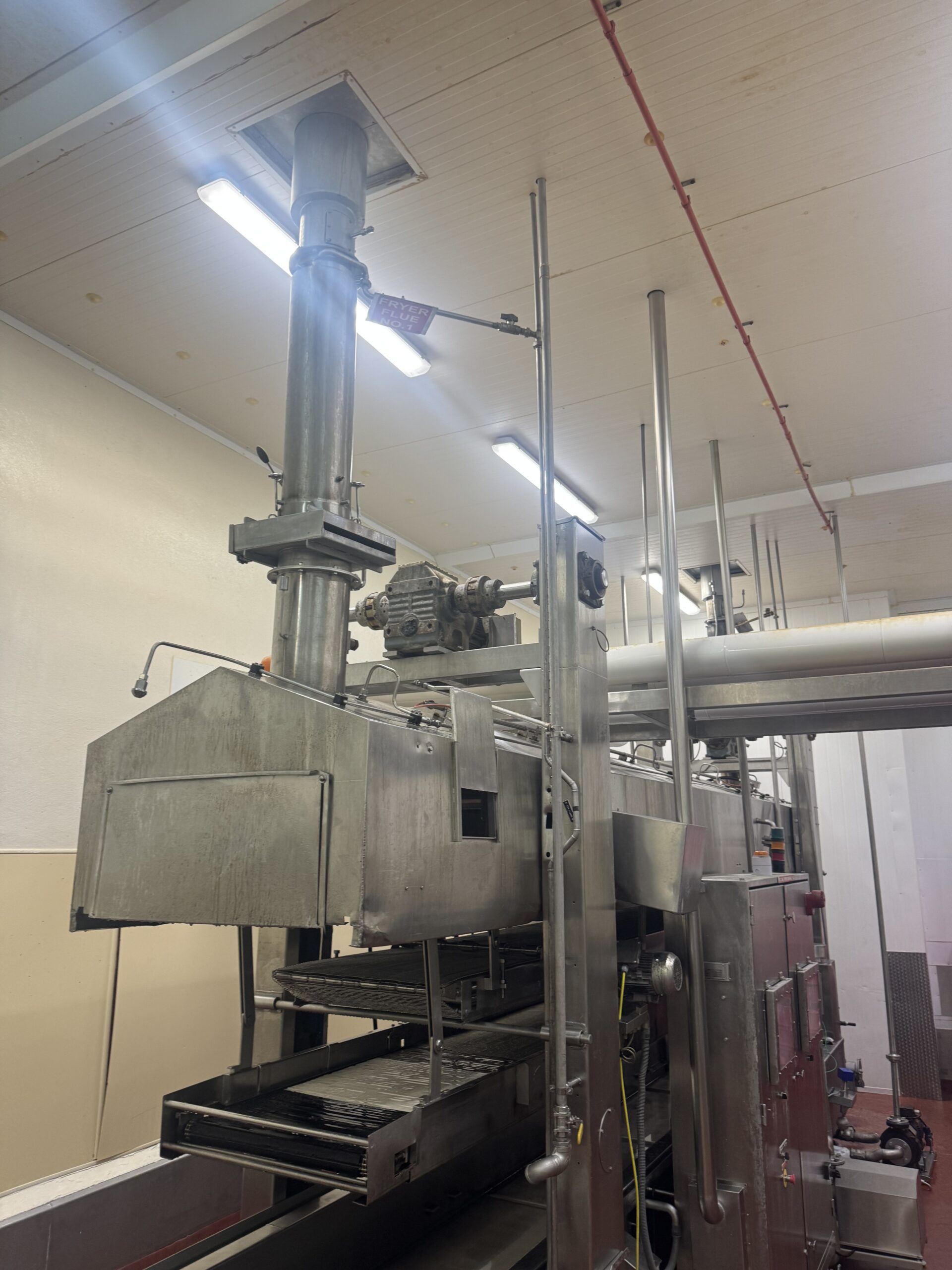
Safe Mist Group delivers tailored fire suppression solutions for all environments, including residential, commercial, and specialist applications.
Our services include:
•System design
•Installation
•Commissioning
•Maintenance
•Upgrades and repairs
We also maintain gas suppression systems, protecting critical equipment, assets, and business continuity.
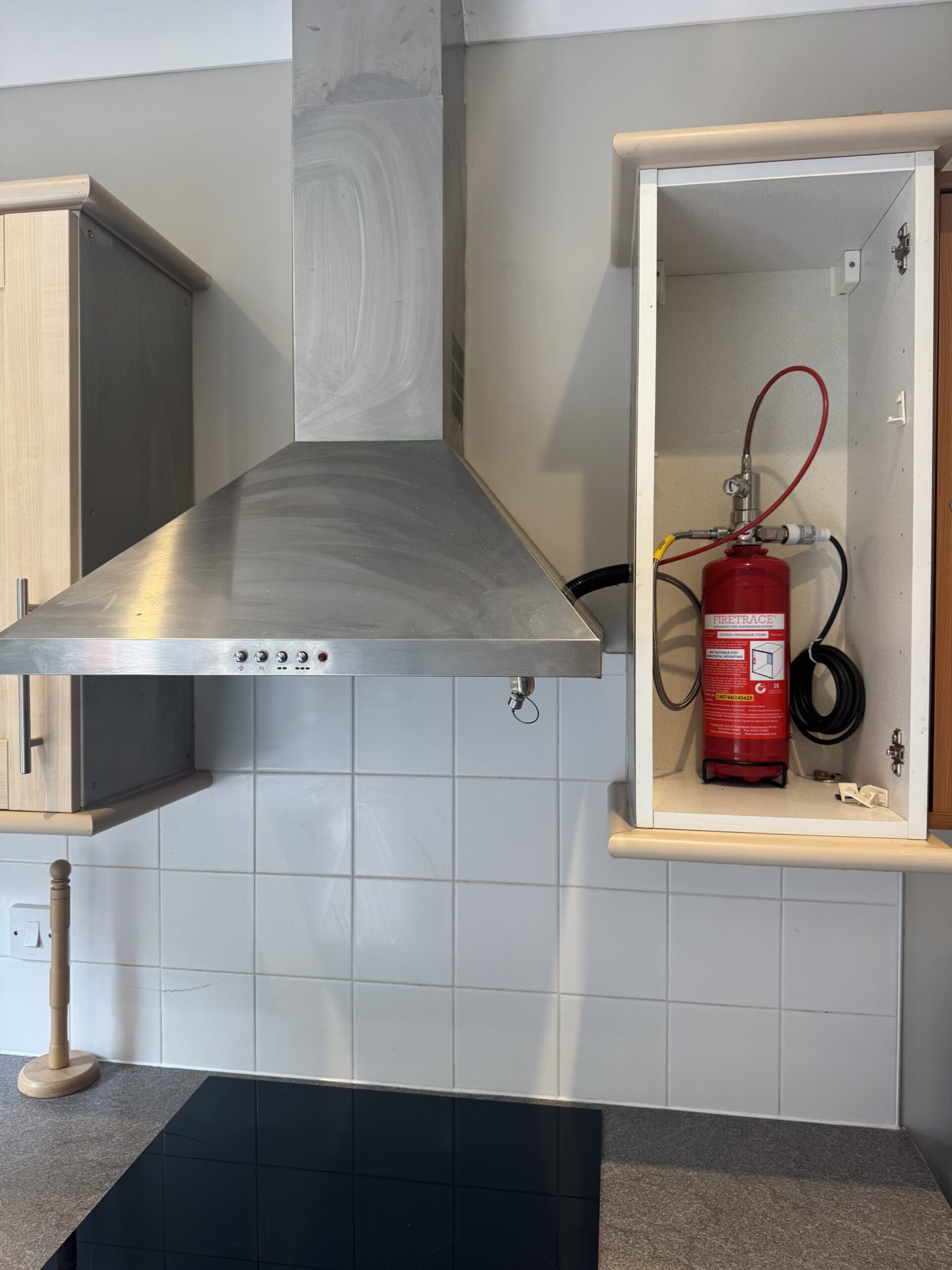
FLEXITEC AUTOMATIC FIRE SUPPRESSION
For applications requiring no electrical power, Flexitec offers a fully mechanical automatic suppression solution.
Flexitec uses a pressurised 6mm detection tube.
When exposed to fire:
1.The tube bursts at the hottest point
2.Line pressure drops
3.The cylinder valve opens
4.A nitrogen‑water mix is released directly to the burst point
Flexitec can be installed as:
•Direct systems – discharge through the burst point
•Indirect systems – discharge through separate nozzles
A range of extinguishing agents can be used depending on the asset being protected.